
Suspension geometry is one of the highest-value areas to address on a Porsche 996 or 997 GT3. These cars already have a strong chassis foundation, but age, lowering, tyre choice and circuit use can move the suspension away from the window in which it works best.
Geometry is also where modifications interact. Increasing rear camber can reduce the available toe range. Lowering the front axle changes the relationship between the steering arm and suspension links and can increase bump-steer. Replacing rubber bushes with solid or spherical joints makes the alignment more consistent under load, but can also increase NVH.
This guide explains the principles rather than prescribing one universal alignment sheet. Exact camber and toe targets should be set around the tyres, ride height, circuit use and driver preference.
Camber: keeping the tyre working in a corner
Camber describes the angle of the wheel relative to vertical when viewed from the front or rear of the vehicle. Negative camber means the top of the tyre leans inwards.
As a GT3 corners hard, the outside tyre carries a large proportion of the lateral load. Additional negative camber can help maintain a more useful contact patch during cornering, improving grip and controlling shoulder wear on track.
Too little negative camber can leave the outer shoulder overloaded. Too much for the way the car is used can reduce straight-line contact and compromise tyre wear. The correct target therefore depends heavily on tyre construction and duty cycle.
Why adjustable camber arms matter on 996 and 997 GT3s
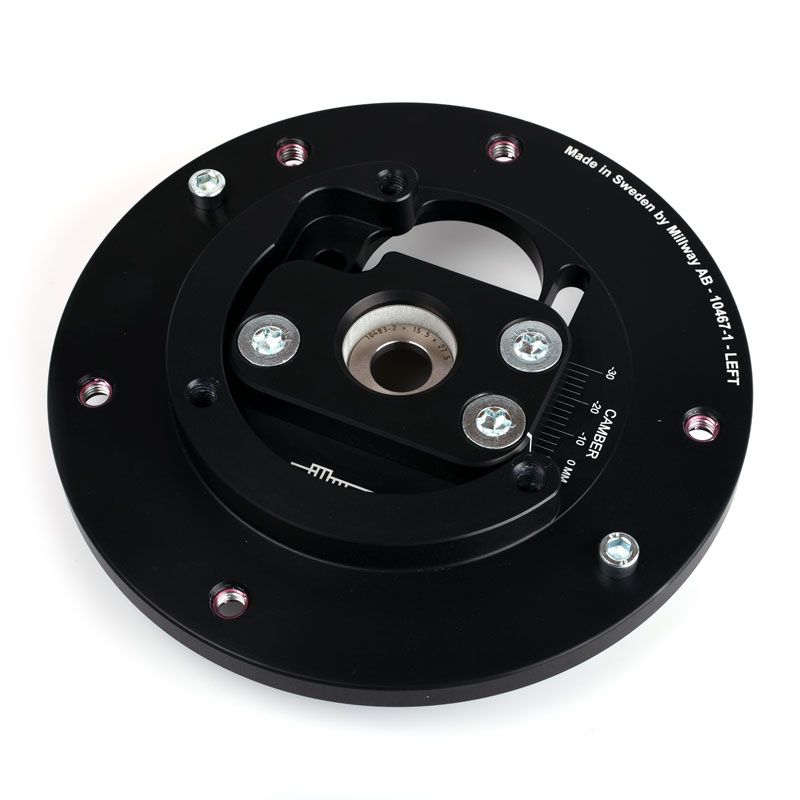
The factory adjustment range can become restrictive as owners move towards more track-focused settings. On both platforms, adjustable rear camber arms increase the available range and make it easier to establish the desired camber without relying solely on the original eccentric adjustment.
For the 996 see the Suspension Secrets adjustable camber arms.

For the 997 see the 997 GT3 / GT3 RS adjustable camber arms.

The 997 also has a camber shim kit in our range for expanding geometry adjustment in a more incremental way.
Rear toe: stability and traction
Toe describes whether the wheels point slightly towards or away from each other when viewed from above. On the rear axle, toe is a major contributor to stability, traction and how confidently the car accepts throttle on corner exit.
One common setup problem on older 911 GT cars is that increasing rear negative camber can consume the available factory adjustment and make it difficult to achieve the desired rear toe at the same time. Adjustable rear toe arms separate those compromises and provide a wider adjustment range.
Browse the 996 GT3 adjustable rear toe arms or the 997 GT3 adjustable rear toe arms.

Bump-steer: why lowering changes steering behaviour
Bump-steer is a change in toe angle as the suspension moves through bump and droop. It occurs when the steering link and suspension geometry do not follow compatible arcs through their travel.
Lowering a 996 or 997 can alter those relationships. A car may feel accurate on smooth tarmac but become nervous over a crest, bump or kerb because the front wheels are effectively changing toe as the suspension moves.
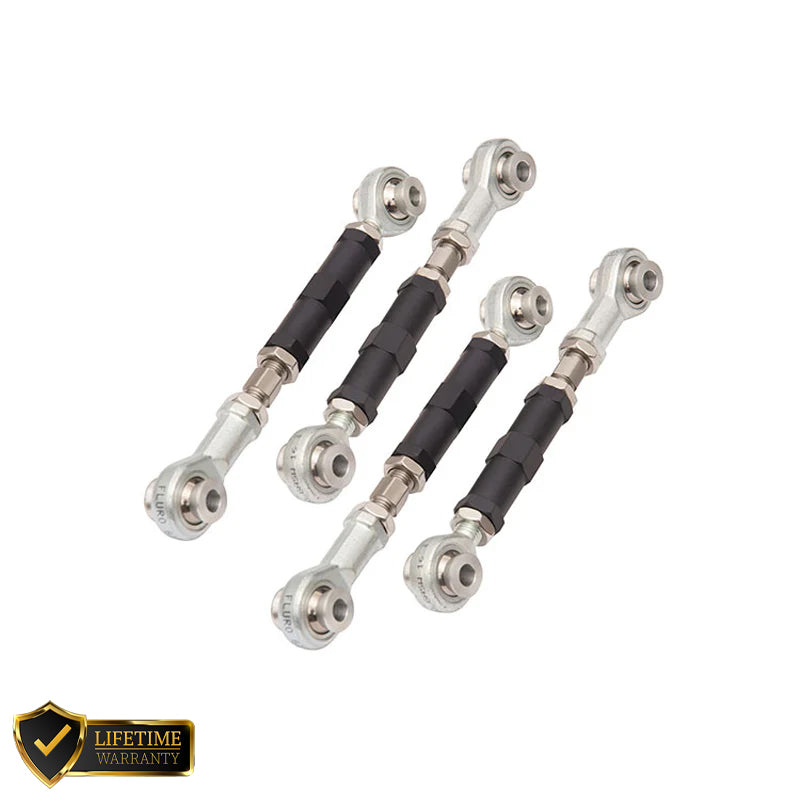
Adjustable bump-steer tie rod ends allow the steering-arm geometry to be corrected for the new ride height. This is particularly valuable on cars that have been lowered significantly or use coilovers with a track-focused ride-height setup.
See the 996 GT3 bump-steer tie rod ends and 997 GT3 bump-steer tie rod ends.

Ride height is part of geometry
Ride height is not simply an aesthetic choice. Changing it alters suspension-arm angles, steering-link position, available travel and the car's rake. If the car is lowered, the alignment should be reset afterwards rather than assuming the old settings remain valid.
Very low ride heights can create new compromises even when the static camber number looks attractive. Suspension travel, bump-steer and roll-centre behaviour all need to be considered.
Rubber-bush compliance and dynamic geometry
An alignment machine measures the car statically. On the road or circuit, rubber bushes deflect under braking and cornering loads. On older 996 and 997 cars those bushes may also have softened or degraded with age.
Solid bush inserts and monoballs reduce that movement, helping camber and toe remain closer to the intended setting under load. The trade-off is a potential increase in noise, vibration and harshness.
For track-focused builds, our Porsche collections include 996 front solid bush inserts, 996 rear solid bush inserts and a 996 inner monoball. Equivalent 997 components are available in the 997 GT3 suspension collection.
Corner weighting after coilovers
Ride-height-adjustable suspension allows the car to be corner weighted. The objective is not to make all four scales show the same number; it is to establish a balanced cross-weight while preserving sensible ride heights and rake for the intended setup.
Corner weighting should be completed with the car in a representative condition, including appropriate fuel load and, where the setup process allows, consideration of driver weight. The final alignment follows once the mechanical ride-height and corner-weight work is complete.
A sensible setup sequence
- Inspect ball joints, wheel bearings, control arms, bushes and tie rods for play or damage.
- Choose springs or coilovers and establish the intended ride-height range.
- Install any geometry hardware required to achieve the target adjustment range.
- Set ride height and corner weight where applicable.
- Correct bump-steer if the lowered geometry requires it.
- Set camber, caster where adjustable, and toe.
- Measure tyre temperatures and wear after real driving or circuit use, then refine one variable at a time.
Road geometry versus track geometry
A road car needs to operate over cambers, potholes, wet conditions and long motorway journeys. A circuit car operates in a much narrower environment and can justify more aggressive alignment, greater NVH and more frequent inspection.
For a dual-purpose GT3, the best setup is normally a compromise that gives enough camber and toe control for the tyres on track without making the car unpleasant or unstable during normal use. There is no single Nürburgring, fast-road or track-day number that is correct for every 996 or 997.
Combine geometry with the correct dampers
Geometry and damping need to work together. If you are also replacing the suspension, read our KW vs Öhlins Porsche 996/997 GT3 suspension guide.
Browse the full Porsche 996 GT3 suspension range or Porsche 997 GT3 suspension range for confirmed-fitment arms, bushes, coilovers and geometry components.
Final point: measure before and after
The most useful suspension setup is repeatable. Record ride heights, alignment settings, damper positions, tyre pressures and tyre temperatures where possible. If a change improves one phase of the corner but damages another, you then have enough information to reverse or refine it rather than tuning by memory.
For older GT3s in particular, begin with mechanical condition. New geometry hardware cannot compensate for worn wheel bearings, damaged joints or tired dampers.