Brake fluid is one of those things that rarely gets talked about until it becomes a problem.
People will spend hundreds on pads, discs, braided lines and tyres, then head out on track with old fluid that's been in the car for years. The result? A long pedal halfway through a session and a very nervous drive back to the pits.
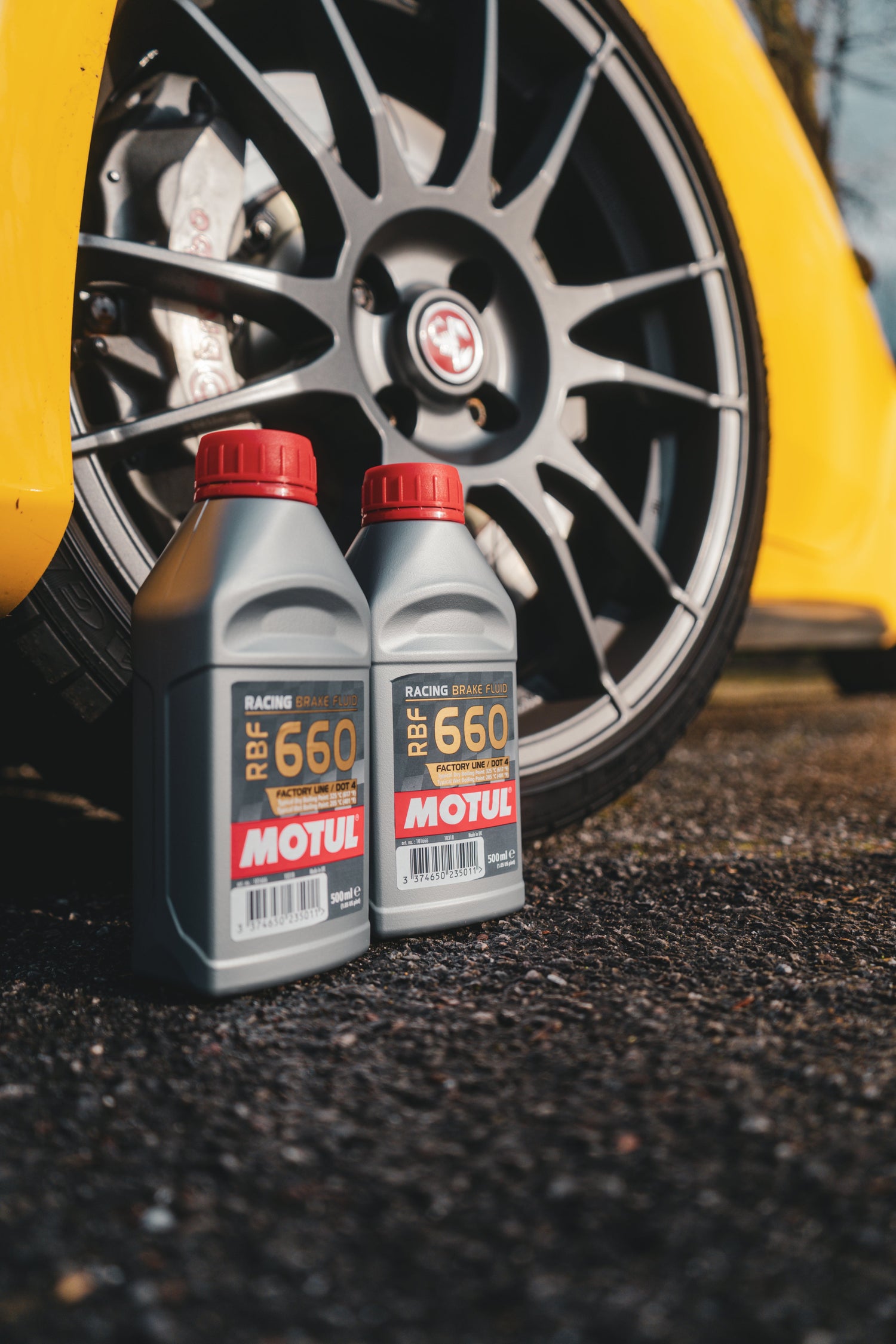
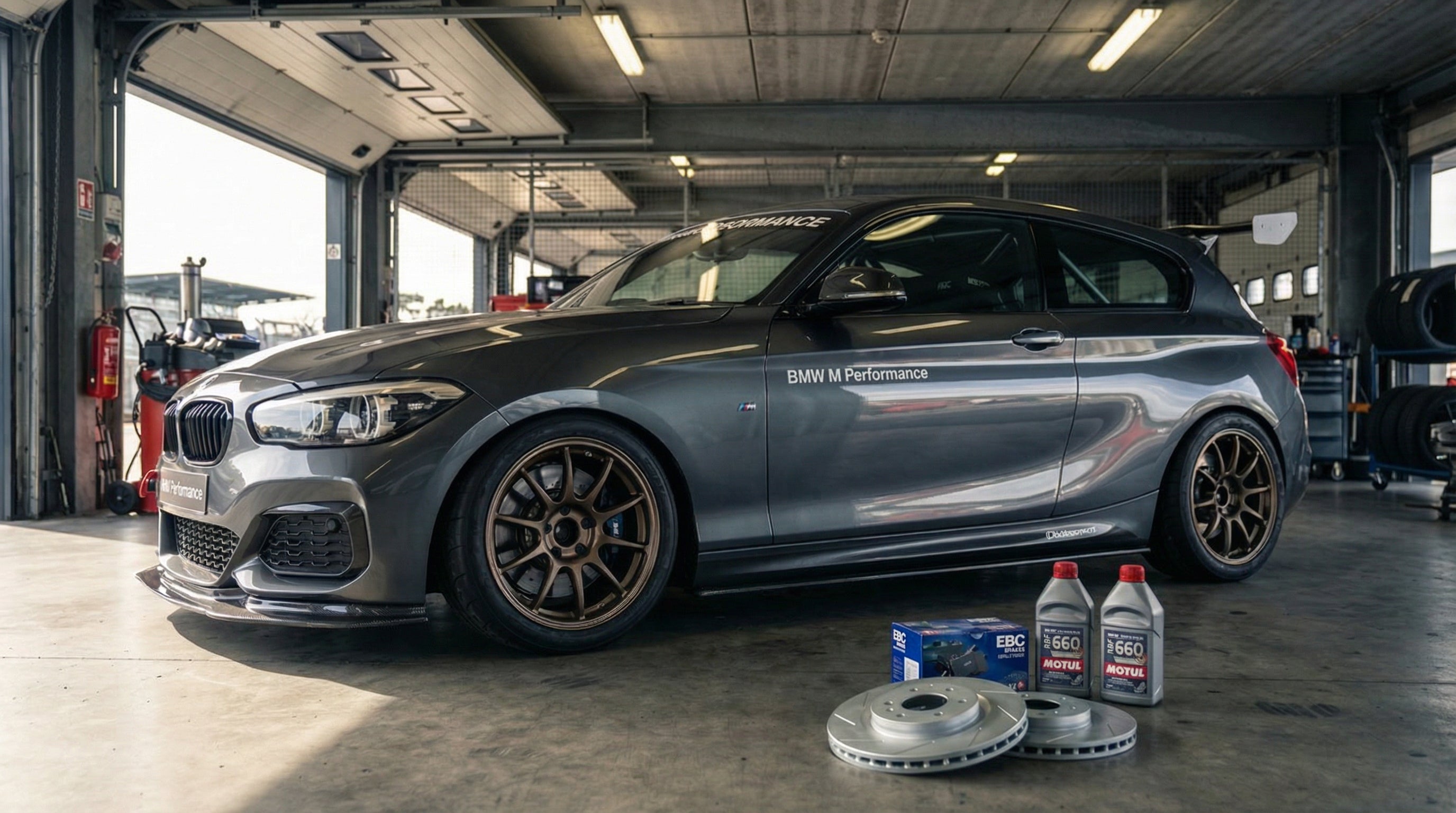
I've run Motul RBF660 in my own BMW M2 Competition for years and it's never let me down. The car sees fast road driving and regular track use, and even with the weight and performance of the M2 Comp, I've never managed to get the fluid to complain.
That said, there are situations where Motul RBF700 makes more sense.
So if you're trying to decide between the two, here's what you actually need to know.
Quick Comparison: Motul RBF660 vs RBF700
|
Brake Fluid |
Dry Boiling Point |
Wet Boiling Point |
Best For |
|---|---|---|---|
|
Motul RBF660 |
Approx. 325–328°C |
Approx. 204°C |
Fast road cars, track days, upgraded braking systems |
|
Motul RBF700 |
Approx. 336°C |
Approx. 205°C |
Heavy track use, racing, extreme brake temperatures |
Looking purely at the numbers, RBF700 has the advantage thanks to its higher dry boiling point.
The question is whether your car actually needs it.
For most people, the answer is probably no.
Why Brake Fluid Matters
When you're driving hard, brake temperatures rise incredibly quickly.
Every time you hit the brakes, heat transfers from the pads and discs into the calipers and ultimately into the brake fluid. If the fluid gets too hot and starts to boil, vapour forms inside the system.
Unlike fluid, vapour compresses.
That's what causes the dreaded soft pedal that nobody wants to experience at the end of a long straight.
The harder you drive, the more important your brake fluid becomes.
Motul RBF660: The Sweet Spot for Most Cars
If someone asks me what brake fluid they should run in a fast road or track day car, my answer is usually RBF660.
It's the fluid I run in my own BMW M2 Competition and it's proven itself time and time again.
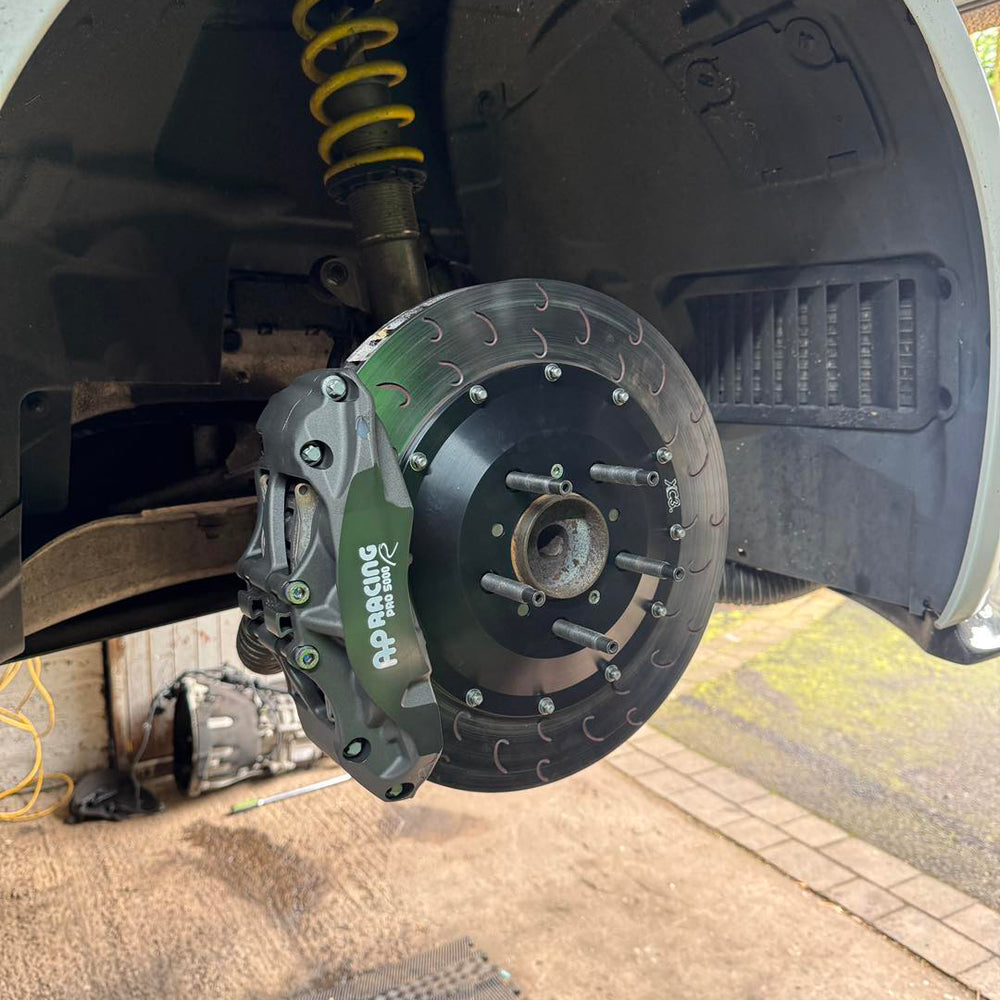
The M2 Comp isn't exactly a lightweight car. Mine runs upgraded pads and sees plenty of hard use, yet RBF660 has always delivered a consistent pedal and reliable braking performance.
That's why it's become one of the most popular performance brake fluids on the market.
Choose Motul RBF660 if:
-
Your car is mainly driven on the road.
-
You do occasional or regular track days.
-
You have upgraded pads and discs.
-
You want excellent pedal feel and temperature resistance.
-
You want proven performance without spending more than necessary.
For cars like the BMW M2, M3, M4, Golf R, Civic Type R, GR Yaris, Megane RS and similar performance cars, RBF660 is usually the perfect choice.
In reality, it's more brake fluid than most drivers will ever need.
Motul RBF700: When You're Really Leaning on the Brakes
RBF700 is aimed at drivers who are genuinely pushing their braking systems to the limit.
We're talking about cars running slicks or semi-slicks, aggressive race pads, big brake kits and spending a lot of time on circuit.
The higher dry boiling point gives you extra temperature headroom when everything is getting seriously hot.
Choose Motul RBF700 if:
-
You do frequent track days.
-
You compete in motorsport.
-
You're running slick or semi-slick tyres.
-
You use aggressive race pads.
-
Your car generates huge brake temperatures.
-
You've experienced fluid-related fade with RBF660.
For dedicated track cars and race cars, that extra margin can be worthwhile.
Is RBF700 Better?
On paper, yes.
In the real world, not necessarily.
This is where a lot of comparison articles get it wrong.
Just because one product has a higher specification doesn't automatically make it the right choice.
If you're driving a fast road car that sees a handful of track days each year, there's a very good chance you'll never get close to the limits of RBF660.
I've certainly never found the limit in my M2 Competition.
Unless you're consistently generating extreme brake temperatures, the difference between the two fluids may be impossible to notice from behind the wheel.
What I Run in My BMW M2 Competition
I get asked this quite a lot.
My own BMW M2 Competition runs Motul RBF660.
The car sees spirited road driving and regular track use, and I've never felt the need to move to RBF700.
Pedal feel remains consistent, braking performance stays strong throughout sessions and it's proven itself to be completely reliable.
Could I run RBF700?
Absolutely.
Do I need to?
No.
That's why I generally recommend RBF660 to most M car owners unless they're doing serious circuit work.
Can You Use RBF660 and RBF700 on the Road?
Yes.
Both are high-performance DOT 4 brake fluids and can be used in compatible road car braking systems.
The important thing is maintenance.
Brake fluid naturally absorbs moisture over time, which lowers its boiling point. That's why regular fluid changes are important regardless of which fluid you choose.
How Often Should You Change It?
For a road car, I recommend changing brake fluid at least annually.
If you're doing track days, it's worth changing it more frequently depending on how often the car is used and how hard it's driven.
Fresh fluid is cheap insurance compared to the cost of a ruined track day.
Which One Should You Buy?
For most performance cars, the answer is simple.
Buy Motul RBF660 if:
-
Your car is used on the road.
-
You do occasional or regular track days.
-
You want the best balance of performance and value.
-
You drive a performance road car like an M2, M3, Golf R or Civic Type R.
Buy Motul RBF700 if:
-
Your car spends most of its life on track.
-
You race competitively.
-
You're running slick tyres and aggressive race pads.
-
You regularly generate extreme brake temperatures.
Final Verdict: Motul RBF660 vs RBF700
Both are excellent brake fluids.
The difference is that RBF660 suits the vast majority of enthusiasts, while RBF700 is aimed at drivers operating at the sharper end of track driving and motorsport.
Personally, I run RBF660 in my BMW M2 Competition and have never felt the need for anything more. It offers fantastic pedal feel, excellent temperature resistance and has proven itself on both road and track.
If you're building a dedicated track or race car, RBF700 gives you additional temperature headroom.
For everyone else, RBF660 remains one of the best performance brake fluids you can buy.
FAQs
Is Motul RBF660 good for track days?
Absolutely. It's one of the most popular track day brake fluids available and it's what I run in my own BMW M2 Competition.
Is Motul RBF700 better than RBF660?
It has a higher dry boiling point, but that doesn't automatically make it the better choice. Most fast road and track day cars will be perfectly served by RBF660.
Can I mix Motul RBF660 and RBF700?
It's always best practice to fully flush the braking system when changing brake fluid to ensure maximum performance.
Is Motul RBF660 DOT 4?
Yes. Motul RBF660 is a high-performance DOT 4 racing brake fluid.
Is Motul RBF700 DOT 4?
Yes. Motul RBF700 is also a high-performance DOT 4 racing brake fluid.
Which Motul brake fluid should I use for my BMW M car?
For most BMW M cars, including the M2 Competition, M3 and M4, I'd recommend Motul RBF660. If the car is heavily track-focused or used for competition, then RBF700 may be worth considering.

Leave a comment
This site is protected by hCaptcha and the hCaptcha Privacy Policy and Terms of Service apply.