
When people start preparing a car for track days, brake fluid is rarely the first thing they think about.
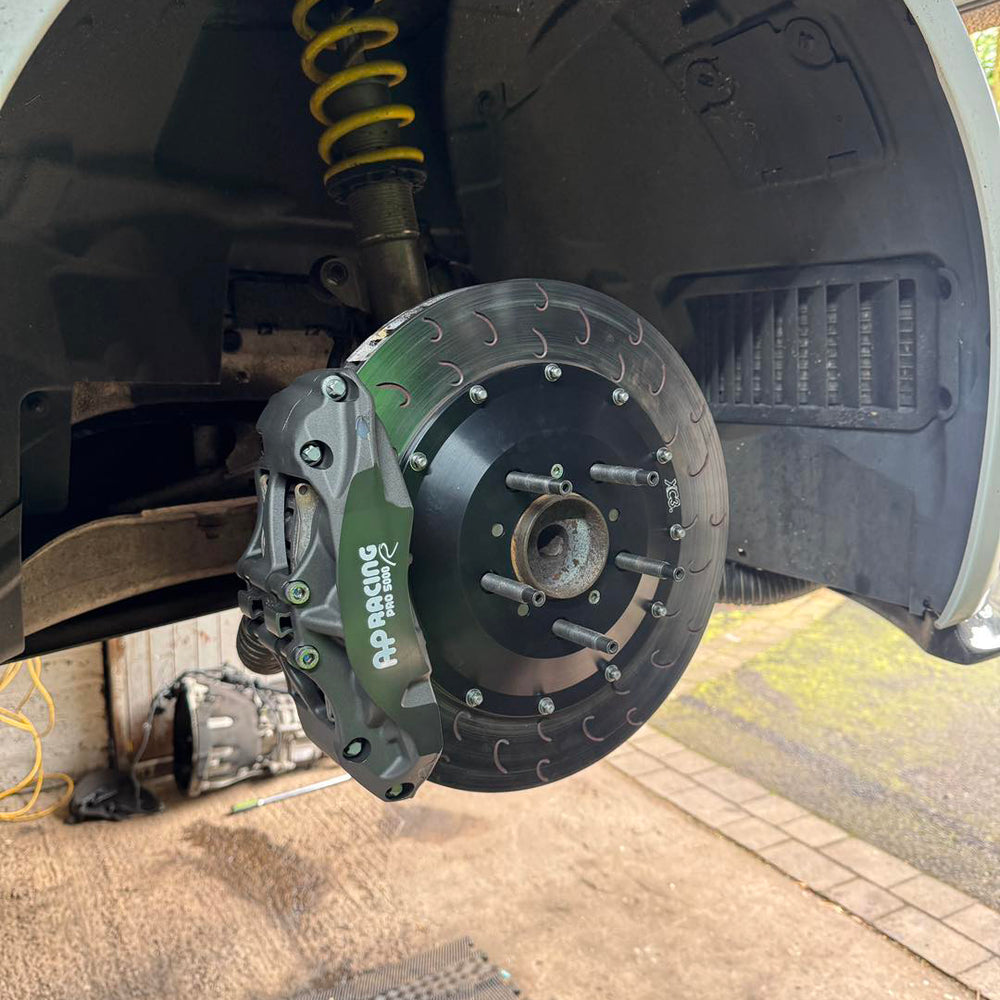
Most drivers focus on brake pads, discs, tyres and suspension. We were no different when we first started developing our BMW M2 Competition track car. The reality is that brake fluid is one of the most important parts of the entire braking system, and it's often the difference between a car that feels consistent all day and one that starts to lose confidence halfway through a session.
The harder you drive, the more important brake fluid becomes.
On track, you're repeatedly braking from high speeds, carrying more speed into corners and generating significantly more heat than you ever would on the road. That heat doesn't just stay in the discs and pads. It transfers into the calipers and eventually into the brake fluid itself.
Once the fluid gets too hot, that's when problems start.
What Does Brake Fluid Do?
Brake fluid is what transfers the force from your foot on the brake pedal to the brake calipers.
When you press the pedal, hydraulic pressure travels through the brake lines and forces the pads against the discs. It's a simple system, but it relies on the fluid remaining stable under pressure and temperature.
The issue is that brake fluid can boil.
When fluid boils, it creates vapour pockets within the braking system. Unlike liquid, vapour compresses. Instead of all your pedal input being transferred directly to the brakes, some of it is spent compressing those vapour pockets.
The result is a soft, long or spongy brake pedal.
On the road, most drivers will never experience this. On track, especially in heavier or more powerful cars, it's surprisingly easy to find the limits of standard brake fluid.
Why Track Driving Is Hard on Brake Fluid
Track driving puts a huge amount of stress on every part of the braking system.
Take our M2 Competition as an example. It's not a lightweight car. With decent power, sticky tyres and aggressive braking zones, it generates a lot of heat very quickly.
At circuits like Donington, Oulton Park or Silverstone, you're repeatedly braking from high speeds lap after lap. The brakes barely get a chance to cool before you're back on them again.
As the session progresses, temperatures continue to rise.
Pads get hotter.
Discs get hotter.
Calipers get hotter.
And eventually the brake fluid gets hotter too.
If the fluid reaches its boiling point, pedal feel changes almost immediately. The car might feel perfect for the first few laps, then suddenly the pedal starts travelling further than normal or loses some of its firmness.
That's usually your first warning sign.
What Is Brake Fluid Boiling Point?
Brake fluid is rated by its boiling point, which tells you how much heat it can withstand before it starts to boil.
You'll normally see two figures quoted:
Dry boiling point refers to fresh brake fluid straight from a sealed container.
Wet boiling point refers to brake fluid after it has absorbed moisture during use.
Brake fluid naturally absorbs moisture from the atmosphere over time. This is completely normal and happens in every vehicle.
The problem is that moisture lowers the boiling point.
That's why old brake fluid can become a weak point in an otherwise capable braking setup.
Even if you're running quality performance fluid, regular changes are still essential if the car sees track use.
What Happens If Brake Fluid Boils?
When brake fluid boils, vapour forms within the hydraulic system.
Because vapour compresses, some of your pedal travel is effectively wasted before pressure reaches the calipers.
This can lead to:
-
A soft brake pedal
-
Increased pedal travel
-
Inconsistent braking performance
-
Reduced confidence under braking
-
Brake fade
-
Significant loss of braking performance in severe cases
Anyone who has experienced a soft pedal approaching a heavy braking zone will tell you it's not something you want to repeat.
This is exactly why high-temperature brake fluid is considered essential for track use.
Standard Brake Fluid vs Performance Brake Fluid
Most standard brake fluids are designed around normal road driving.
School runs, commuting and motorway journeys simply don't generate the temperatures seen during track driving.
Performance brake fluids are specifically designed to cope with much higher temperatures.
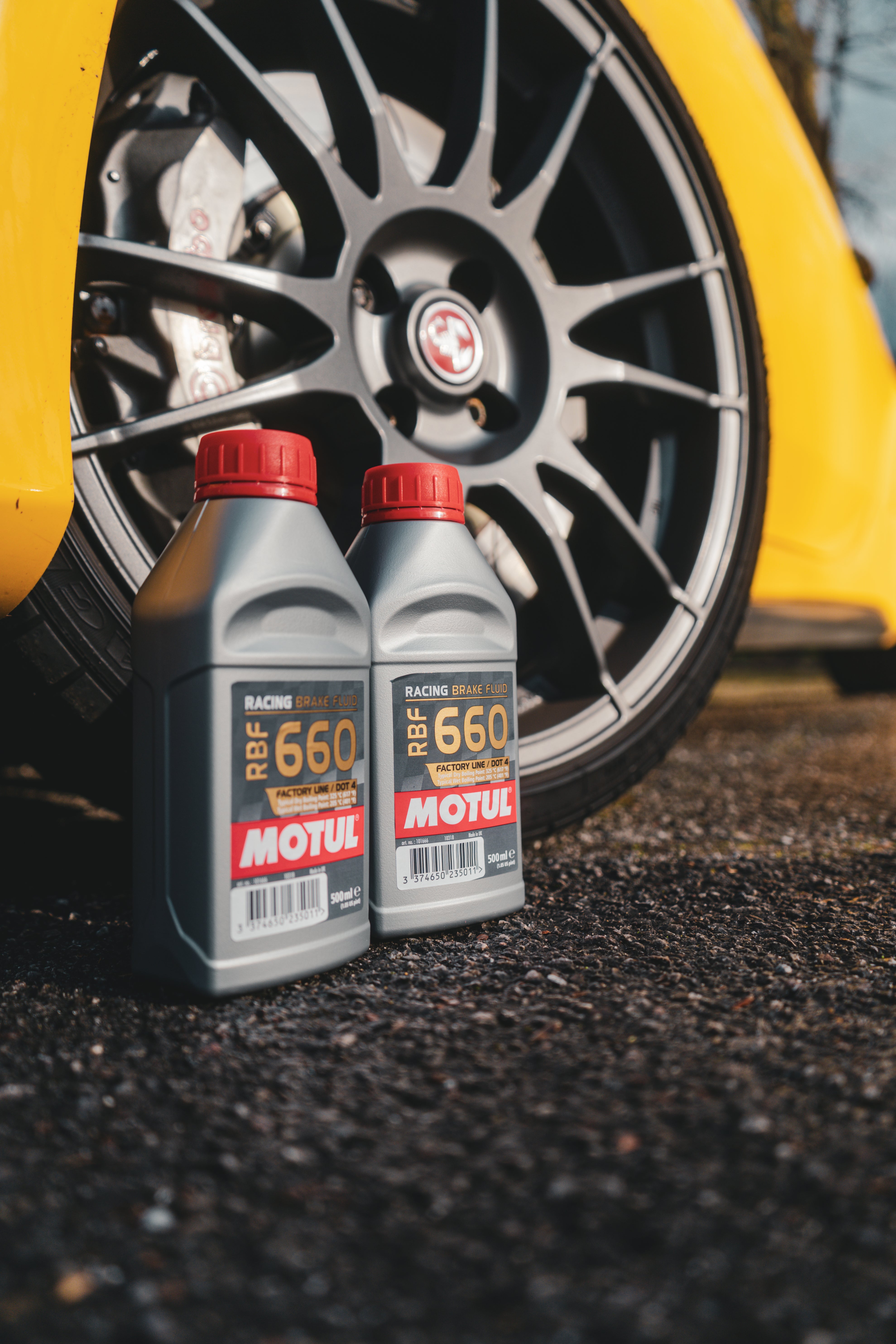
Products such as Motul RBF660 and Motul RBF700 offer significantly higher boiling points than many standard fluids, helping maintain a consistent pedal even when brake temperatures climb.
On our own M2 Competition, upgrading brake fluid was one of the earliest braking upgrades we made. It's relatively inexpensive compared to pads, discs or calipers, yet it has a huge impact on consistency and confidence.
For anyone planning regular track days, it's one of the best value upgrades available.
Signs Your Brake Fluid Is Not Coping on Track
If your brake fluid is struggling, you'll usually notice one or more of the following symptoms:
-
The brake pedal feels softer than normal
-
Pedal travel increases during a session
-
Braking performance deteriorates after several laps
-
The brakes feel strong initially but fade as temperatures rise
-
The pedal requires pumping to regain firmness
-
You lose confidence braking into corners
If you're experiencing any of these symptoms, it's worth inspecting the braking system before your next session.
How Often Should You Change Brake Fluid for Track Use?
Brake fluid maintenance becomes much more important once a car starts seeing track use.
For road cars, manufacturers often recommend relatively long service intervals. For track cars, those intervals are generally too long.
As a rough guide:
-
Fast road cars should have brake fluid changed at least annually
-
Occasional track day cars should have fluid changed regularly throughout the season
-
Frequent track cars should have fluid replaced more often
-
Dedicated race cars may have fluid changed before every event
Our own approach with the M2 Competition is simple. Brake fluid is treated as a consumable, just like pads and tyres.
It's cheap insurance compared to the consequences of brake issues on track.
Which Brake Fluid Should You Use on Track?
For most fast road and track day cars, a quality high-performance DOT 4 brake fluid is the ideal choice.
Motul RBF660 has become one of the most popular options for track day enthusiasts because it offers excellent temperature resistance while remaining suitable for fast road use.
For more demanding applications, Motul RBF700 takes things a step further.
Cars running aggressive brake pads, semi-slick tyres, increased power or seeing regular circuit use can benefit from the additional temperature capability.
For the majority of track day drivers, RBF660 is an excellent all-round choice.
For serious track work and competition use, RBF700 is often the better option.
Brake Fluid Works With the Rest of Your Setup
One mistake we see regularly is people upgrading everything except the brake fluid.
A braking system works as a package.
For the best results, brake fluid should complement:
-
Performance brake pads
-
Quality brake discs
-
Braided brake lines
-
Proper brake cooling
-
Correct bleeding procedures
-
Regular maintenance
You can fit the best pads on the market, but if the fluid boils after a few laps, you'll still end up with a poor pedal.
Likewise, expensive calipers won't perform at their best if the fluid isn't capable of handling the temperatures being generated.
Final Thoughts
Brake fluid isn't the most exciting modification you can make to a track car, but it's one of the most important.
It's something we've learned first-hand through developing and tracking our own M2 Competition. As braking performance improves and lap times come down, the demands placed on the fluid increase dramatically.
Fresh, high-quality brake fluid helps maintain pedal feel, consistency and confidence when temperatures rise.
Whether you're heading out for your first track day or running a dedicated track build, brake fluid should be viewed as essential maintenance rather than an optional upgrade.
It's one of the simplest ways to improve braking reliability and one of the best value upgrades you can make.
FAQs
Why does brake fluid matter on track?
Brake fluid transfers hydraulic pressure from the pedal to the brakes. On track, temperatures rise significantly, and if the fluid cannot handle the heat it can boil, causing a soft pedal and reduced braking performance.
What happens when brake fluid boils?
Boiling brake fluid creates vapour within the braking system. Because vapour compresses, pedal feel becomes soft and braking performance can become inconsistent.
Do I need performance brake fluid for track days?
Absolutely. Even relatively standard cars can generate enough brake temperature on track to overwhelm standard brake fluid. Performance brake fluid is one of the first upgrades we recommend.
How often should I change brake fluid for track days?
It depends on how often the car is used on track, but regular fluid changes are essential. Many track day drivers replace brake fluid at least once per season, while heavily used track cars may require more frequent changes.
Is Motul RBF660 good for track use?
Yes. Motul RBF660 is one of the most widely used track day brake fluids thanks to its excellent boiling point and consistent pedal feel under hard use.
Is Motul RBF700 worth it?
For serious track cars, race cars or vehicles generating very high brake temperatures, RBF700 offers additional performance and temperature resistance over RBF660.
Can old brake fluid cause brake fade?
Yes. As brake fluid absorbs moisture, its boiling point decreases. Under track conditions this can lead to fluid boiling, a soft pedal and reduced braking performance.


Leave a comment
This site is protected by hCaptcha and the hCaptcha Privacy Policy and Terms of Service apply.