
Some BC Racing applications are offered with more than one rear suspension layout. You may see a conventional kit that retains a separate rear spring and damper, alongside a product described as true rear or rear integrated.
These are not simply two names for the same kit. The rear spring is mounted differently, the load path can change, and the correct choice depends on the exact chassis and how the car will be used.
What is a divorced rear suspension layout?
On a divorced rear layout, the spring and damper are mounted separately. This mirrors the factory architecture used on many BMW and VAG platforms. A coilover kit for this layout normally replaces the rear spring and damper while retaining the separate mounting positions.
For most road and mixed-use cars, the conventional layout has an obvious advantage: it follows the original suspension architecture and avoids introducing a new spring load into a damper mounting point that may not have been designed for it.
What is a true-rear or rear-integrated coilover?
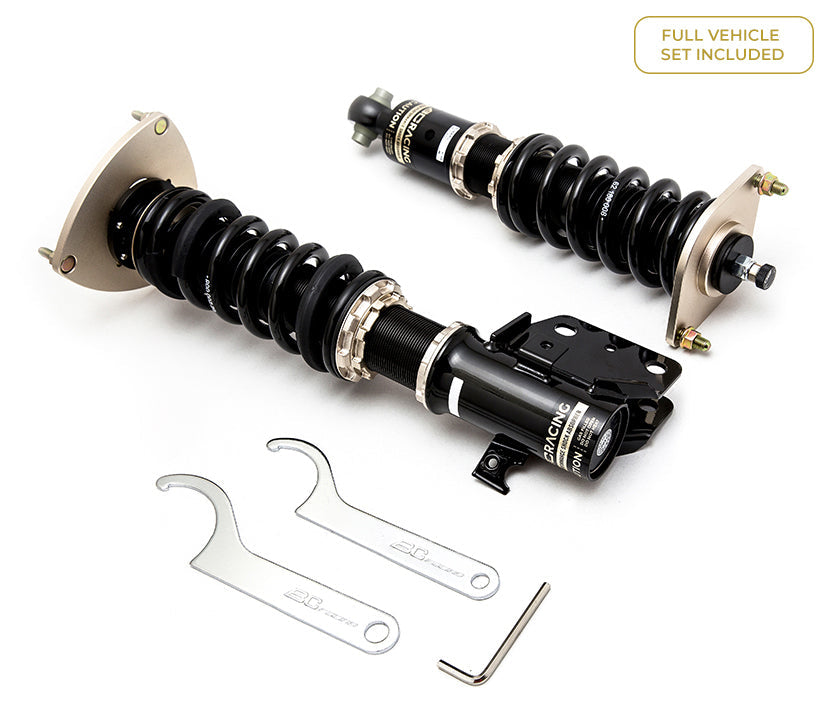
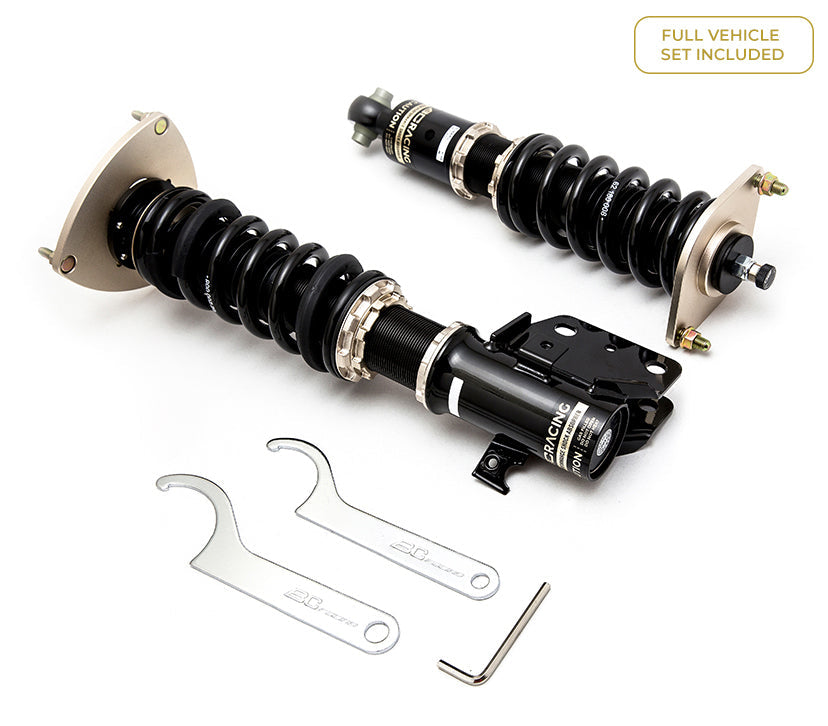
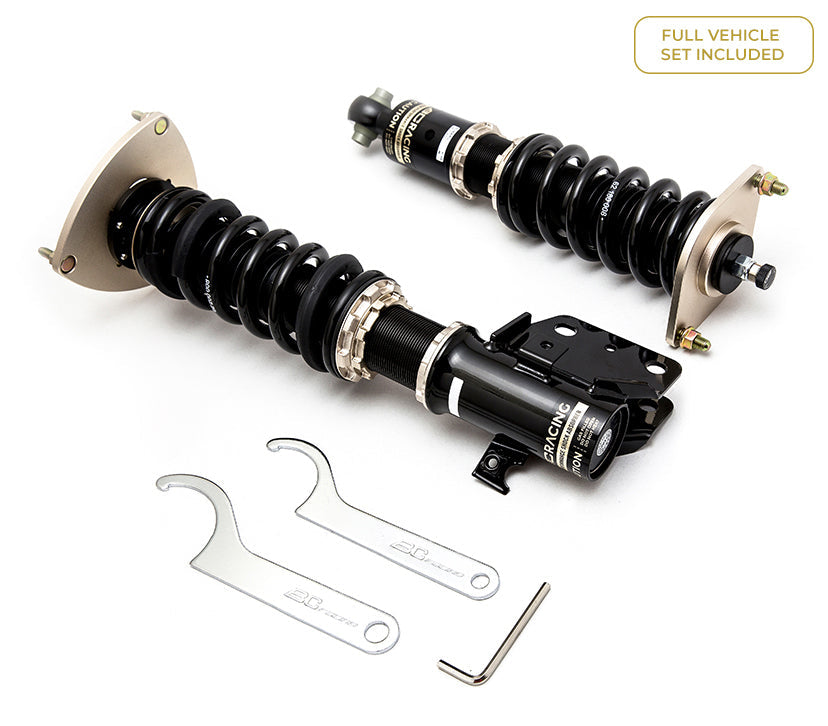
A true-rear coilover combines the rear spring and damper into one coilover assembly. In the Nineteen72 catalogue, BC Racing also uses Rear Integrated in product naming for these applications.
BC Racing currently offers genuine true-rear products for selected platforms, including BMW F31 Touring applications, and there are rear-integrated options in several other chassis families. The important point is that a true-rear configuration should be treated as a specific product application, not as a universal conversion that can be assumed to fit any car with a divorced rear spring.
Why choose a true-rear coilover?
On an application engineered for it, a true-rear arrangement can package the spring and damper together and make spring changes and setup work more straightforward in a motorsport environment. It can also be part of a more dedicated track build where the rear suspension architecture and chassis have been prepared around the conversion.
That does not make it automatically better for a road car. The correct architecture is the one that suits the chassis, mounting points, intended use and installation requirements.
Why chassis preparation matters
Moving the rear spring load onto or closer to a damper mounting point can change how forces enter the body shell. This is why the exact product notes matter.
BC Racing's own E36 true-rear application, for example, is explicitly described as a race application only and requires roll-cage integration. That is a useful illustration of why a true-rear product should never be selected purely because it sounds more motorsport-focused.
Requirements vary by platform. Always follow the instructions and restrictions for the exact BC Racing part number, and get chassis-specific installation advice where a conversion changes the original rear suspension architecture.
True rear vs divorced rear: key differences
| Area | Divorced rear | True rear / integrated |
|---|---|---|
| Spring location | Separate from damper | Spring surrounds damper |
| Factory-style architecture | Usually retained | Changed on originally divorced platforms |
| Setup access | Spring and damper adjusted separately | Spring/damper packaged together |
| Chassis load path | Closer to OEM arrangement | Can change depending on chassis |
| Best use | Road, fast-road and many track-day builds | Only where the specific application and build justify it |
Which one should I choose for a road car?
If the vehicle was designed with a divorced rear spring and you do not have a specific reason to change it, the conventional BC Racing application is normally the sensible route. It preserves the intended layout and is easier to assess for road reliability, noise and servicing.
Which one should I choose for a track car?
A track-focused car can justify a true-rear solution where BC Racing offers an application and the chassis is correctly prepared. The decision should be made as part of the whole suspension setup, including spring rate, damper series, geometry, tyre and chassis reinforcement requirements where applicable.
For spring-rate selection, read our BC Racing spring-rate guide. For damper-series choice, see BR vs DS vs RM vs ER vs ZX.
Vehicle examples in the Nineteen72 BC Racing range
Relevant collections include BMW F31 Touring BC Racing coilovers, BMW E36 M3 BC Racing coilovers, BMW E46 M3 BC Racing coilovers, BMW F87 M2 BC Racing coilovers and Volkswagen Golf Mk5 BC Racing coilovers. Use the exact product variant and application notes within each collection to identify whether the kit uses the standard rear arrangement or an integrated-rear configuration.
True-rear coilover FAQs
Is true rear always better?
No. It is a different suspension architecture, not an automatic performance upgrade.
Can I fit a true-rear coilover to any BMW with a separate rear spring?
No. Only use a product explicitly designed for the chassis and follow its installation and reinforcement requirements.
Does a true-rear conversion need chassis reinforcement?
It depends on the vehicle and product. Some applications carry explicit structural requirements. BC Racing's E36 true-rear race application, for example, requires roll-cage integration. Do not generalise one chassis requirement to another.
What does Rear Integrated mean on a BC Racing product?
In the current Nineteen72 catalogue it identifies a rear coilover layout where the spring is integrated with the rear damper rather than remaining in a separate spring location.
How do I know which kit is correct?
Use the exact chassis, body style, top-mount configuration, drivetrain and rear-layout notes on the product. If there is any uncertainty, contact Nineteen72 Performance before ordering.