


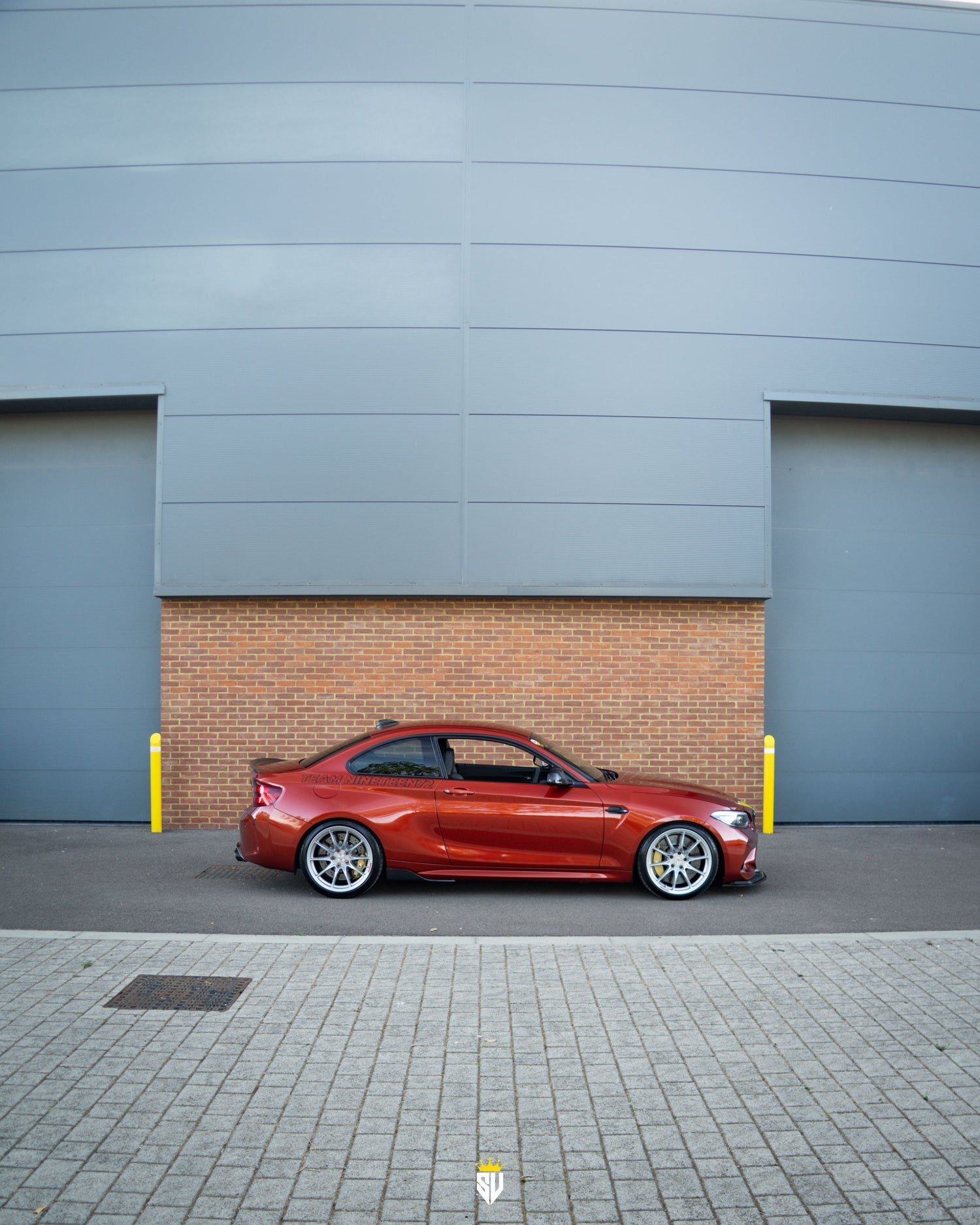
BMW M2 Competition F87: Built for the road, developed on track
A data-led build focused on chassis control, braking, airflow and repeatability—not a parts catalogue disguised as a project car.
Last updated August 2026Improve the car without removing the reasons we enjoy driving it
The car began completely standard. The objective was never to build the most powerful M2 Competition possible. It was to make the car more consistent, more predictable and easier to use repeatedly.
Still usable
It must remain comfortable enough for normal road use, passengers, luggage and longer journeys.
More repeatable
Brakes, tyres and suspension need to work for more than a single fast lap or short burst of driving.
Measured honestly
Where a result has not been measured, it is recorded as a driver observation—not sold as a proven gain.

Starting point
The car is a Sunset Orange BMW M2 Competition with approximately 38,000 miles and a complete service history recorded through the BMW iDrive system, including BMW and independent specialist servicing.
It retains its full interior, factory M Sport seats, Harman Kardon audio, navigation and road equipment. This is important because the final result must work as a complete road car—not only as a track-day tool.
- Fast-road use
- European trips
- Track days
- Brake and suspension evaluation
- Long-term component testing
Control first, stiffness second
The factory car is capable, but repeated direction changes, braking zones and compressions expose movement that is less obvious during normal road driving.
Nitron R1 coilovers
The car uses a new Nitron R1 system with single-adjustable combined damping. It was selected to improve body control while retaining enough compliance for road use.
Avoid an excessively low ride height and retain useful suspension travel.
Recorded Nitron specification
- Front main spring: 140 N/mm
- Rear main spring: 90 N/mm
- Front helper spring: 20 N/mm
- Rear helper spring: 20 N/mm
- Base setting recorded at 10 clicks front and rear
What changed on the road
The car now settles more quickly after a compression or rapid steering input. The front axle feels more closely connected to the driver, and the body takes less time to recover between direction changes.
The compromise is equally real: sharp road imperfections are transmitted more clearly into the cabin. This is not automatically a negative, but it is part of the cost of the additional control.
The Nitron service card specifies maintenance after 10–15 hours of race or track use, or approximately 12,000–18,000 miles of street use. Those intervals will be logged rather than ignored.
Powerflex differential mounting
A rear dual differential mount and upgraded rear differential bushes reduce unwanted movement under acceleration and abrupt load changes.
Powerflex transmission bushes
The transmission bushes reduce drivetrain movement and make throttle and gear-change responses feel more immediate.
Powerflex caster bushes
The upgraded front control arm bushes improve response and stability, with some additional road texture transmitted into the cabin.
Bimecc stud conversion
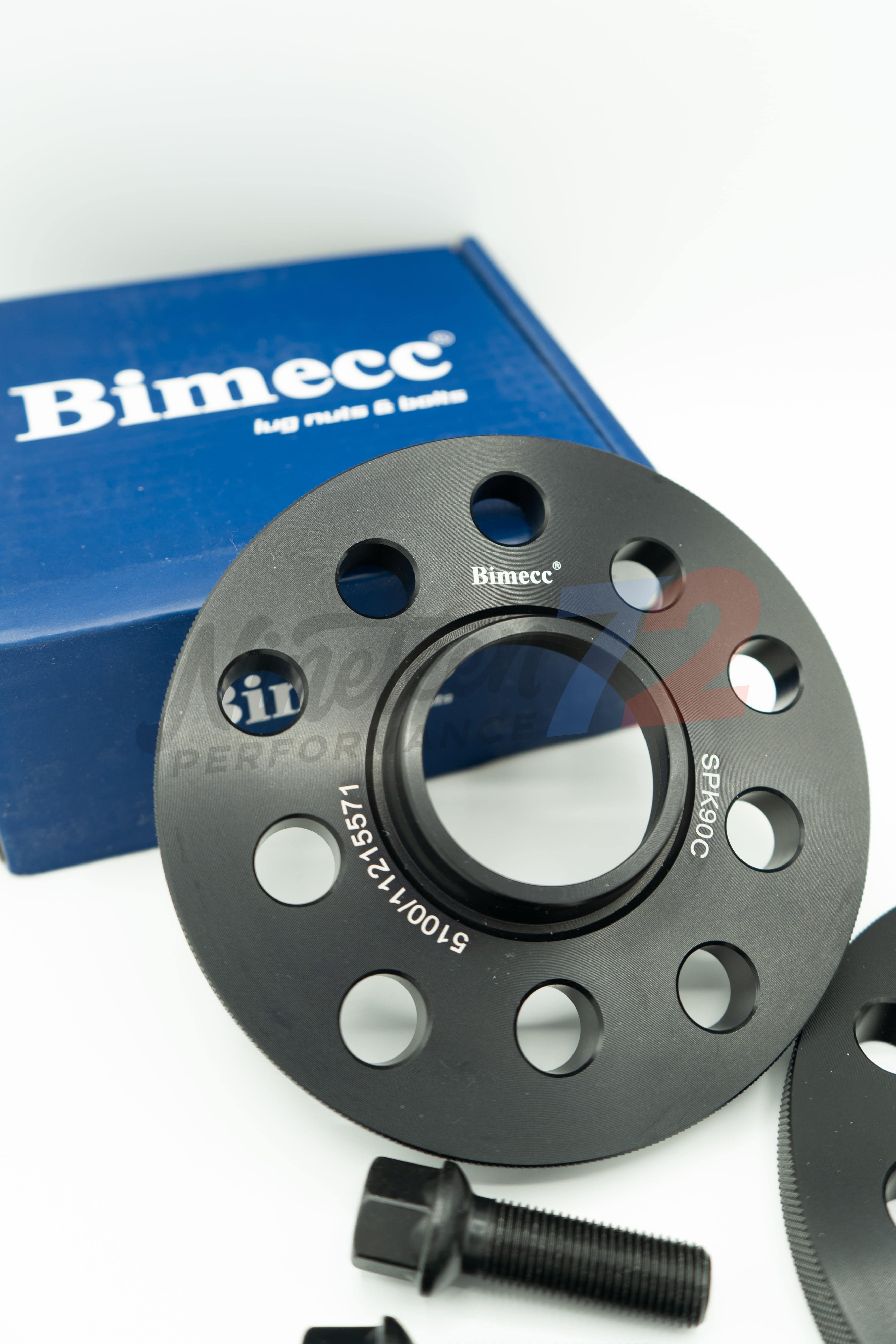
The wheel bolts have been replaced by a Bimecc stud conversion with rose nuts. The benefit is practical rather than cosmetic: quicker wheel changes, easier wheel location and less frustration during track-day pad, tyre and wheel work.
The numbers behind the current chassis
This is the part most project-car features leave out. The following figures come from the supplied corner-weight and alignment records.
1,732 kg
Recorded with the sheet marked “90 kg Full”. The measurement condition should be repeated for future comparisons.
50.01%
A near-neutral diagonal balance, useful for creating consistent left- and right-hand responses.
52.53 / 47.47
Front-to-rear percentage split recorded on the setup sheet.
Corner-weight results
| Position | Weight |
|---|---|
| Left front | 442 kg |
| Right front | 468 kg |
| Left rear | 398 kg |
| Right rear | 424 kg |
| Total | 1,732 kg |
The left side carries 48.51% and the right side 51.49%. This is not being presented as a lightweight build; it is a road-ready car with its interior, equipment and additional chassis hardware retained.
Final alignment settings All values shown in decimal degrees
| Position | Camber (°) | Caster (°) | Toe (°) |
|---|---|---|---|
| Left front | −1.883° | 7.517° | 0.083° |
| Right front | −1.583° | 7.317° | 0.083° |
| Left rear | −1.550° | — | 0.133° |
| Right rear | −1.517° | — | 0.133° |
Front total toe is 0.167°, rear total toe is 0.267°, steer-ahead is 0.000° and thrust angle is 0.000°.
This is a road-and-track compromise rather than an aggressive circuit-only alignment. The next step is to compare these settings against tyre temperatures and shoulder wear.
See what changed from the initial alignment
| Measurement | Before (°) | Final (°) |
|---|---|---|
| Front total toe | −0.033° | 0.167° |
| Rear total toe | 0.400° | 0.267° |
| Rear left toe | −0.017° | 0.133° |
| Rear right toe | 0.417° | 0.133° |
| Thrust angle | −0.217° | 0.000° |
The most important correction was at the rear: the initial toe values were heavily mismatched left to right. The final 0.133° per side gives a symmetrical rear setting and a neutral thrust angle.
A road tyre with enough capability to begin the development work
A dedicated track tyre may come later. The current setup reflects how the car is actually used now: UK roads, wet weather, longer journeys and occasional circuit work.

19-inch 2Forge ZF8 wheels
The ZF8 was chosen to balance brake clearance, strength, appearance, tyre availability and replacement cost. The original BMW wheels have been retained for comparison and future use.
Continental SportContact 7 tyres
The Continental SportContact 7 provides strong road performance in the conditions the car sees most often. A dedicated track tyre would resist heat more effectively, but would create compromises in standing water, cold conditions and day-to-day usability.
On-Track TPMS sensors
The aftermarket wheels retain the factory tyre-pressure monitoring function. A manual calibrated gauge is still used before track sessions.

Two pad setups, because one compound cannot do everything well
The factory 2NH hardware remains in place, but it is supported by rebuilt calipers, separate road and track pads, braided lines, high-temperature fluid and additional cooling.
EBC Redstuff front and rear
Chosen for normal road use, cold response and more manageable behaviour in everyday traffic.
EBC RP-X front, Bluestuff rear
A higher-temperature front compound paired with a track-capable rear pad. The combination will be judged on balance, wear and consistency.

Supporting hardware
- All four 2NH calipers rebuilt
- Calipers refinished in BMW CCB-style gold
- HEL braided brake lines
- Motul RBF 700 brake fluid
- Genuine BMW race brake ducts moulded into the front bumper
The ducts are intended to direct additional air towards the front brakes. Temperature paint, thermal labels or direct measurement will be used before claiming a specific temperature reduction.
Functional hardware, cautious claims
The front splitter and rear bumper outlets have a clear intended function. That does not mean an unmeasured downforce or drag figure should be invented.
72Design GTS splitter
The splitter uses a chassis-mounted support rather than relying only on the bumper skin. It adds inspection requirements and reduces ground clearance.
XC3 speed holes
Three rear bumper outlets provide a defined exit path for air behind the bumper. Their effect will be assessed through testing and inspection.

Other exterior changes include a CT Carbon spoiler, mirror caps and aerial cover, a Genuine BMW M Performance carbon grille, Automotive Passion carbon mud flaps and full front-end paint protection film. These are included transparently, but the cosmetic components are not being described as measured performance upgrades.
BMW M2 CS calibration, not a maximum-power aftermarket build
The previous description of the engine as “never remapped” was no longer accurate. The car now runs the BMW M2 CS engine software calibration.
M2 CS calibration
The S55 retains its standard mechanical hardware but now uses the BMW M2 CS engine tune.
CS DCT map
The gearbox calibration changes shift behaviour and strategy rather than adding mechanical hardware.
CS differential map
The electronically controlled differential uses the CS calibration alongside the upgraded mounts and bushes.
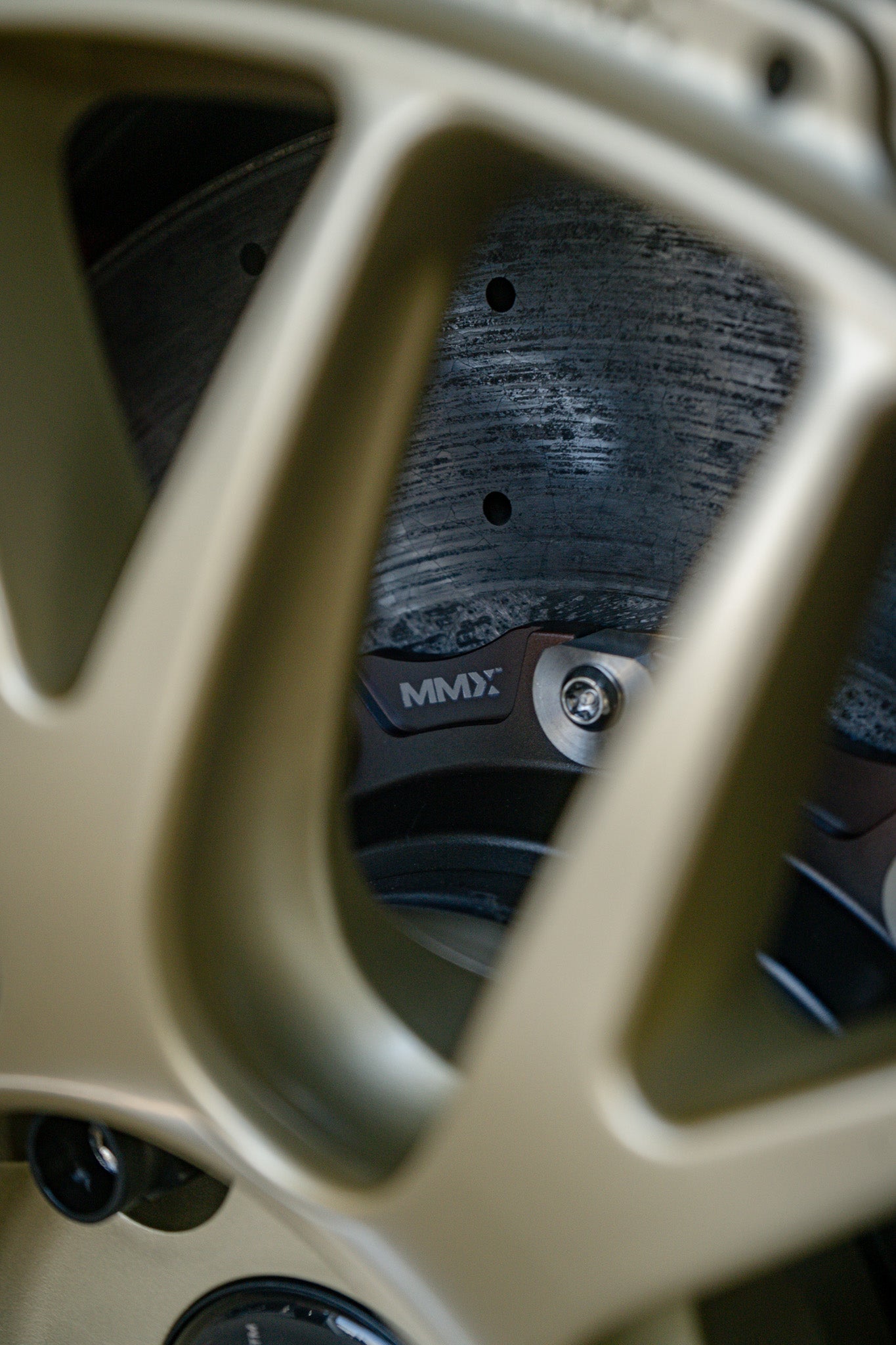
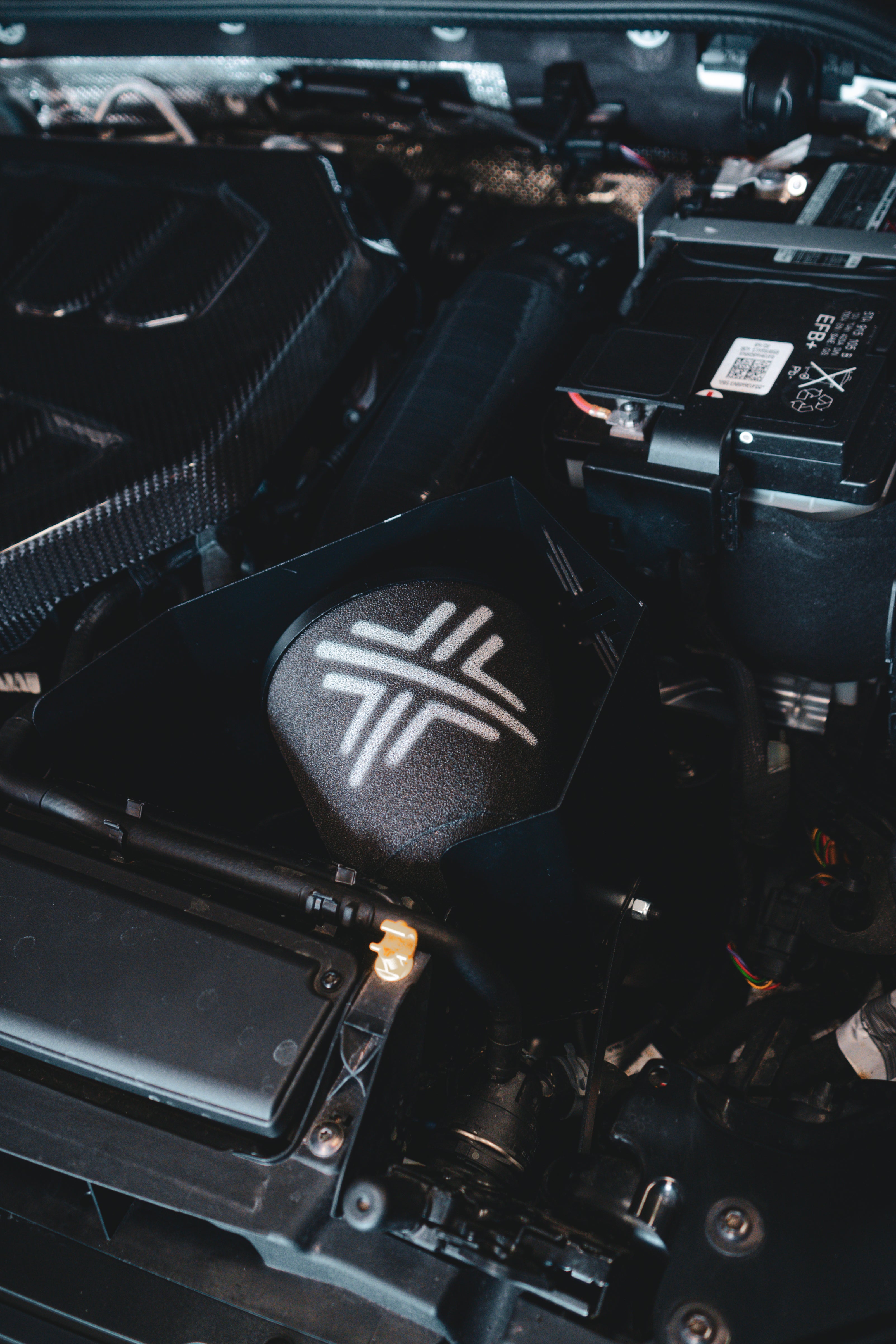
This is not being presented as a bespoke maximum-output engine build. The car still uses the standard S55 hardware, with K&N replacement filters and an MMX engine-bay dress-up kit. The MMX parts are cosmetic and are listed for completeness.
Because the CS differential calibration and the mechanical rear-mount changes were introduced as part of the same development stage, their individual effects cannot be separated without back-to-back testing.
What the parts list does not tell you
The useful part of a case study is not the brand names. It is what changed, what became worse and what still needs testing.
Stiffer is not automatically better
The upgraded bushes improve response but transmit more mechanical feedback. The correct answer depends on intended use.
Alignment is more than “add camber”
Correcting rear toe and thrust angle created a better foundation than chasing an aggressive headline camber figure.
Road and track pads are different tools
Separate pad sets allow each compound to operate closer to the job it was designed to perform.
Modified cars need more inspection
Studs, splitter mounts, ducts, coilovers, bushes and brake hardware all require routine checks.

What is fitted now
Cosmetic, functional and software changes are separated so that the specification does not imply every item produces a measurable performance gain.
- Nitron R1 coilovers
- 140 N/mm front springs
- 90 N/mm rear springs
- Powerflex rear dual differential mount
- Powerflex differential bushes
- Powerflex transmission bushes
- Powerflex front caster bushes
- Bimecc studs and rose nuts
- 19-inch 2Forge ZF8 wheels
- Continental SportContact 7 tyres
- On-Track TPMS sensors
- Rebuilt BMW 2NH calipers
- RP-X front track pads
- Bluestuff rear track pads
- Redstuff road pads
- HEL braided lines
- Motul RBF 700
- BMW M2 CS engine calibration
- BMW M2 CS DCT calibration
- BMW M2 CS differential calibration
- Standard S55 mechanical hardware
- K&N filters
- MMX engine-bay dress-up kit
- 72Design GTS splitter
- Chassis-mounted splitter support
- Genuine BMW race brake ducts
- XC3 rear speed holes
- CT Carbon spoiler
- CT Carbon mirror caps
- CT Carbon aerial cover
- BMW M Performance carbon grille
- Carbon mud flaps
- Front-end PPF
- Retrimmed Alcantara steering wheel
- Red 12 o’clock marker
- Factory carbon interior trim
- Full-screen Apple CarPlay
- Full factory interior retained
- 1,732 kg recorded total
- 50.01% cross weight
- 52.53% front weight
- 0.000° thrust angle
- Symmetrical 0.133° rear toe per side
View notable factory specification
The car was supplied in Sunset Orange Metallic with the M DCT transmission, 2NH M Sport brakes, M Sport seats, M seat belts, carbon-fibre interior trim, Harman Kardon audio, Professional Navigation, Adaptive LED headlights, smartphone integration, heated seats, sun protection glazing and front and rear Park Distance Control.


Leave a comment
This site is protected by hCaptcha and the hCaptcha Privacy Policy and Terms of Service apply.